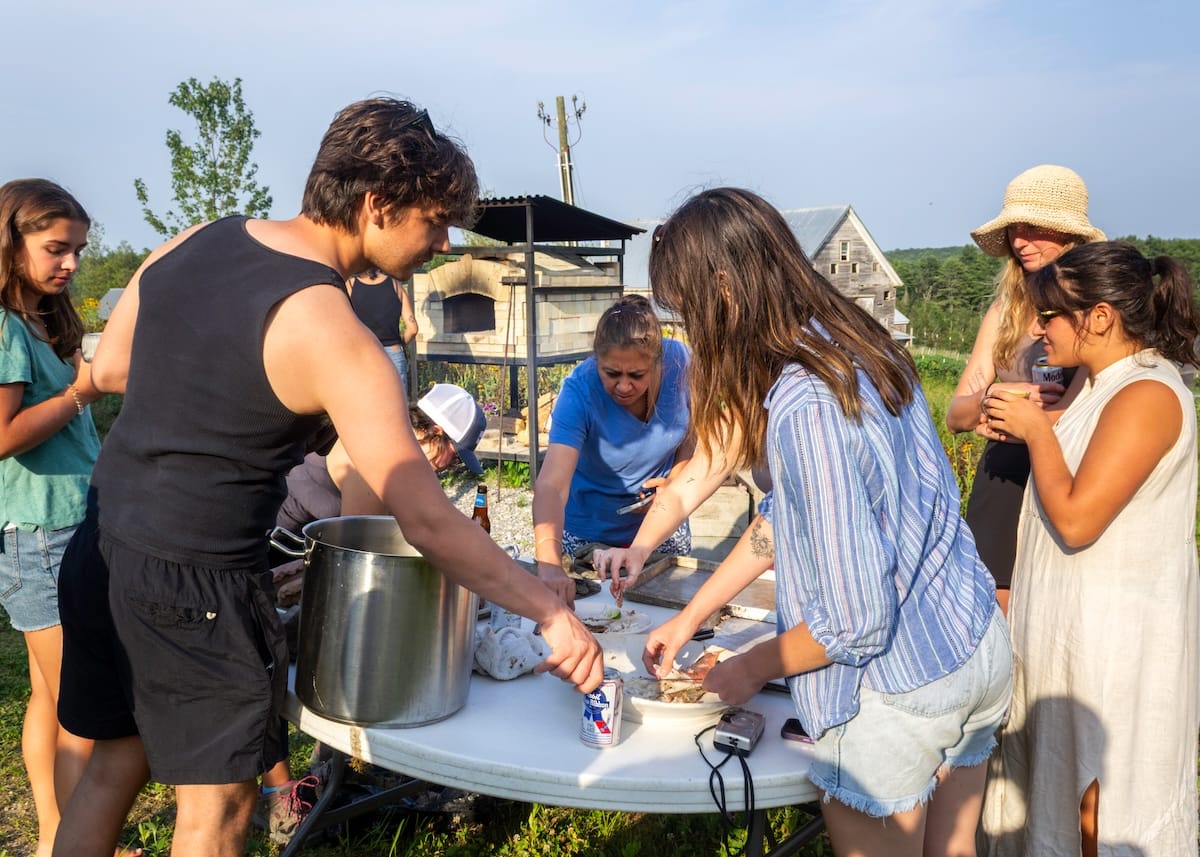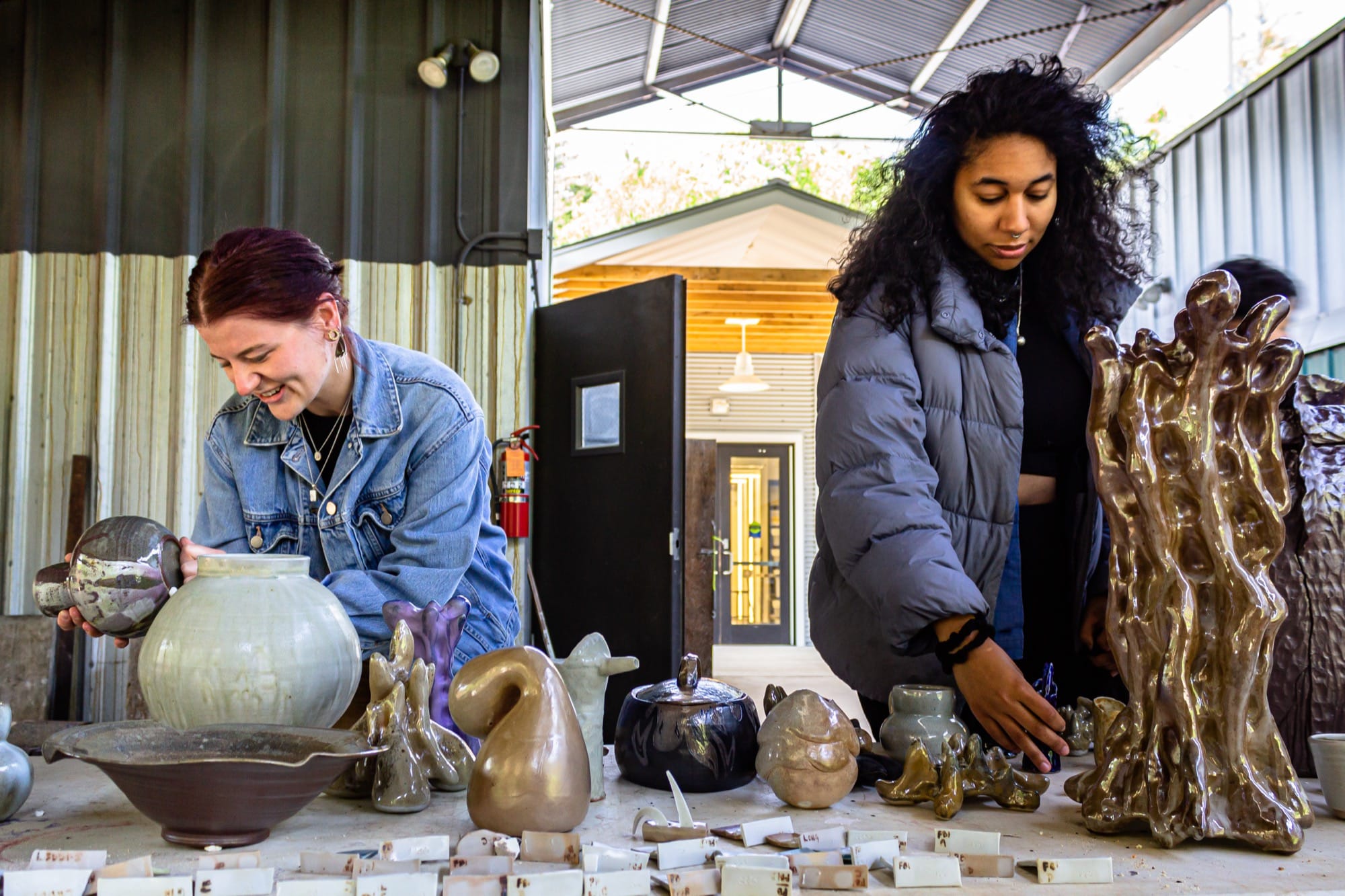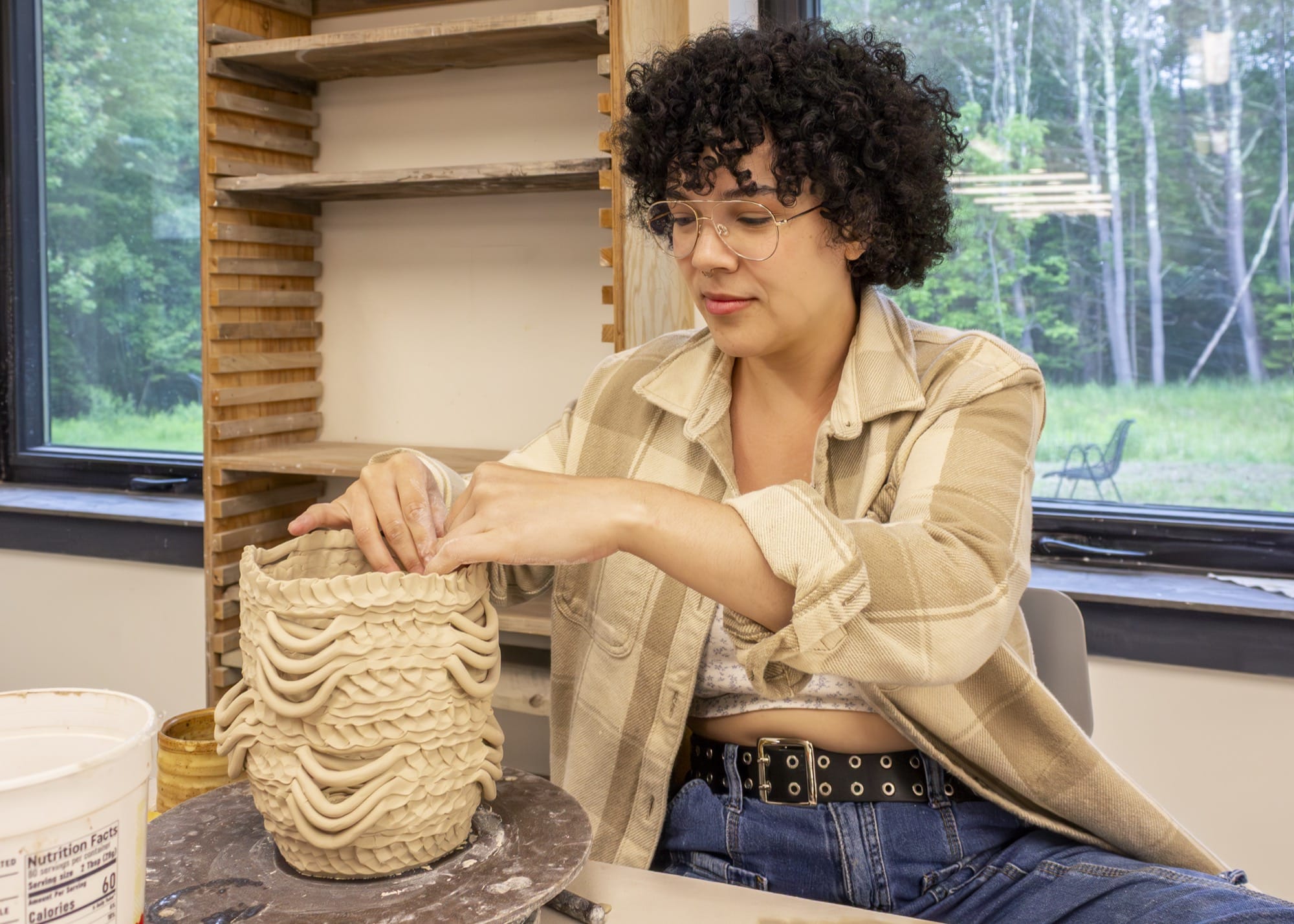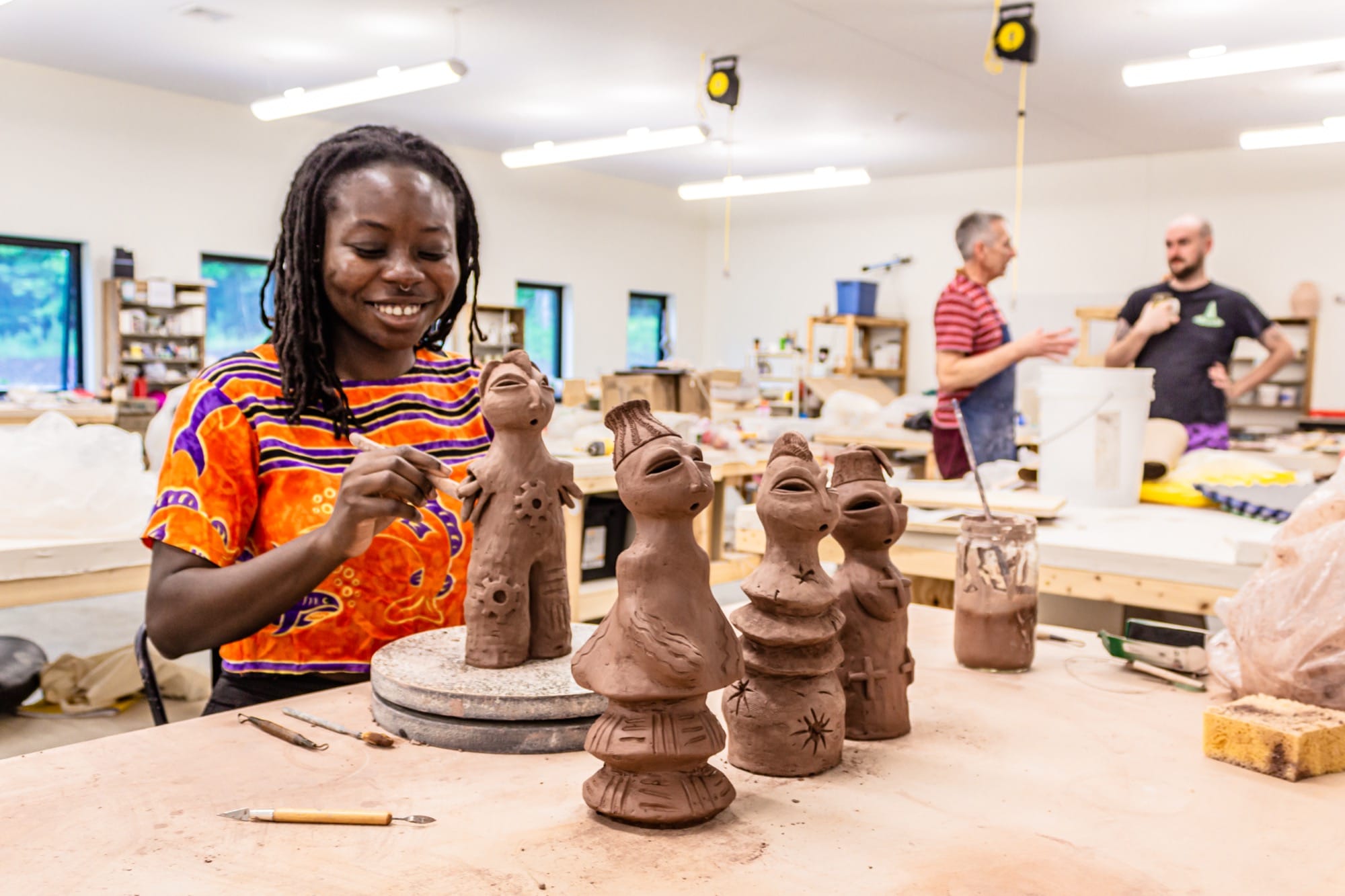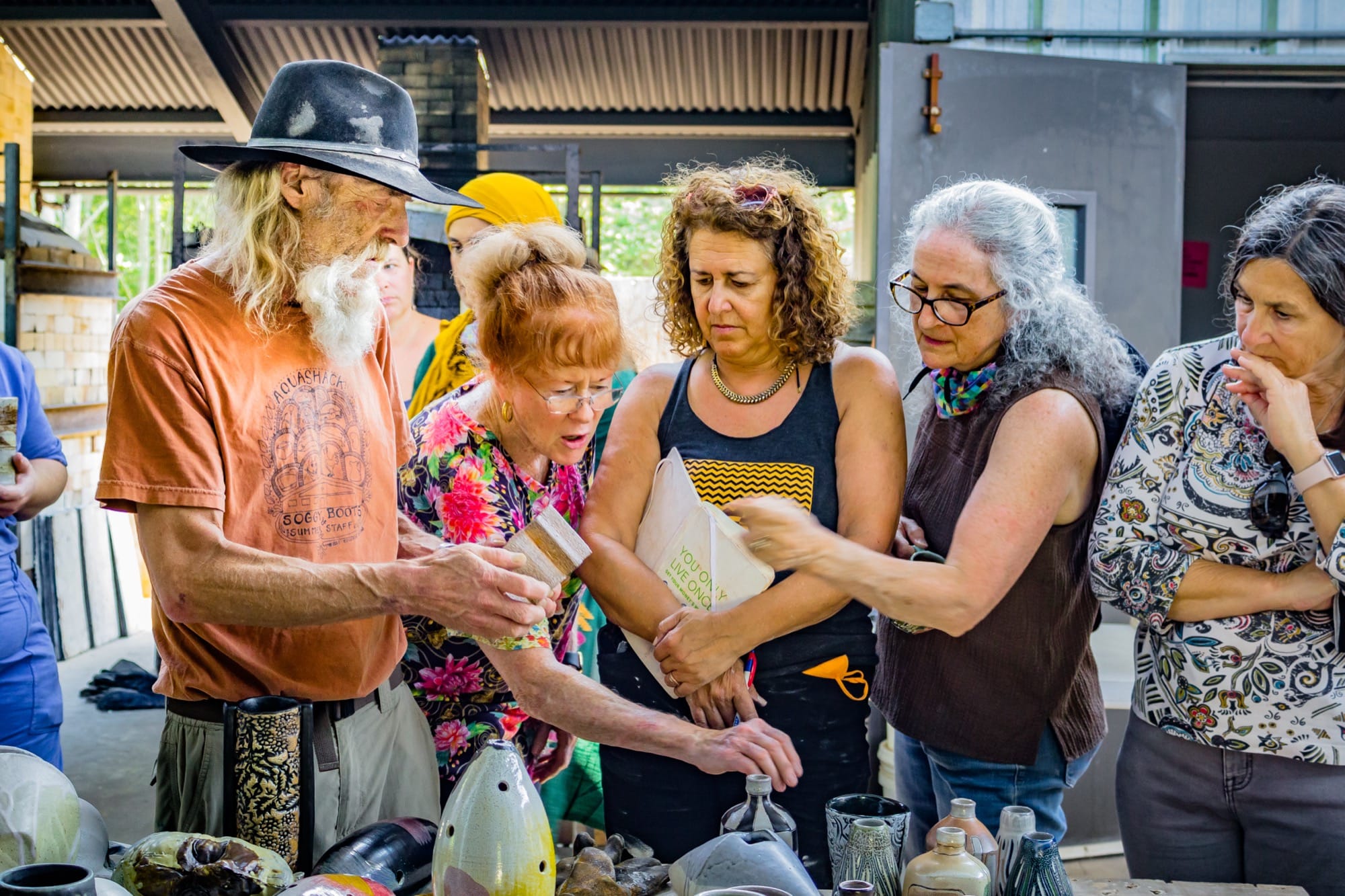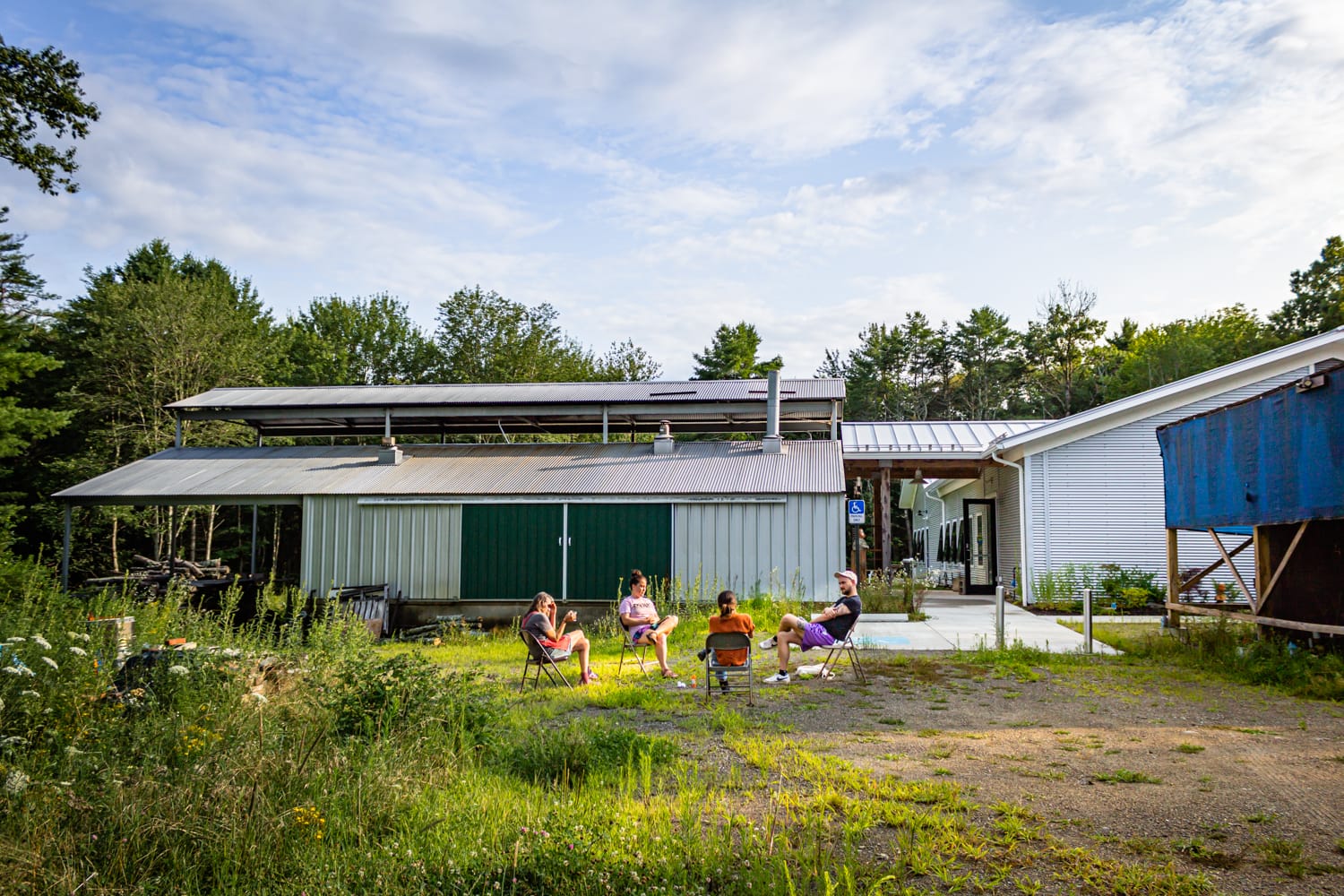
Watershed’s two-week summer residency sessions bring together cohorts of artists interested in living and working in community. Driven by a central theme, each session offers the opportunity to develop personal practice alongside other ceramicists. Residents spend their time making, playing, and resting, supported by our expansive studio facilities, nourishing meals, and welcoming campus.
Organizing artists propose session themes, invite a small group of artists to anchor the session with them, then a juried open call fills the remaining slots. This unique residency structure forms bonds between artists at all points in their careers and creates an environment where knowledge sharing is key.
2026 Summer Sessions
Session IJune 1–12Organizers:

How can ceramicists move between ancient and novel technologies? The second residency of its kind at Watershed, Digital Clay 2.0 welcomes digital fabrication into the studio while embracing the spontaneity inherent in the ceramics process. Structured around mini-tutorials and communal projects, residents will work to generate, gather, and document new applications of technologically-informed production, resulting in a dynamic open-source database with images, links, recipes, and tutorials.
Session IIJune 15–26Organizers:
How can ceramicists move between ancient and novel technologies? The second residency of its kind at Watershed,Digital Clay 2.0,welcomes digital fabrication into the studio while embracing the spontaneity inherent in the ceramics process. Structured around mini-tutorials and communal projects, residents will work to generate, gather, and document new applications of technologically-informed production, resulting in a dynamic open-source database with images, links, recipes, and tutorials.
Session IIIJune 29–10Organizers:
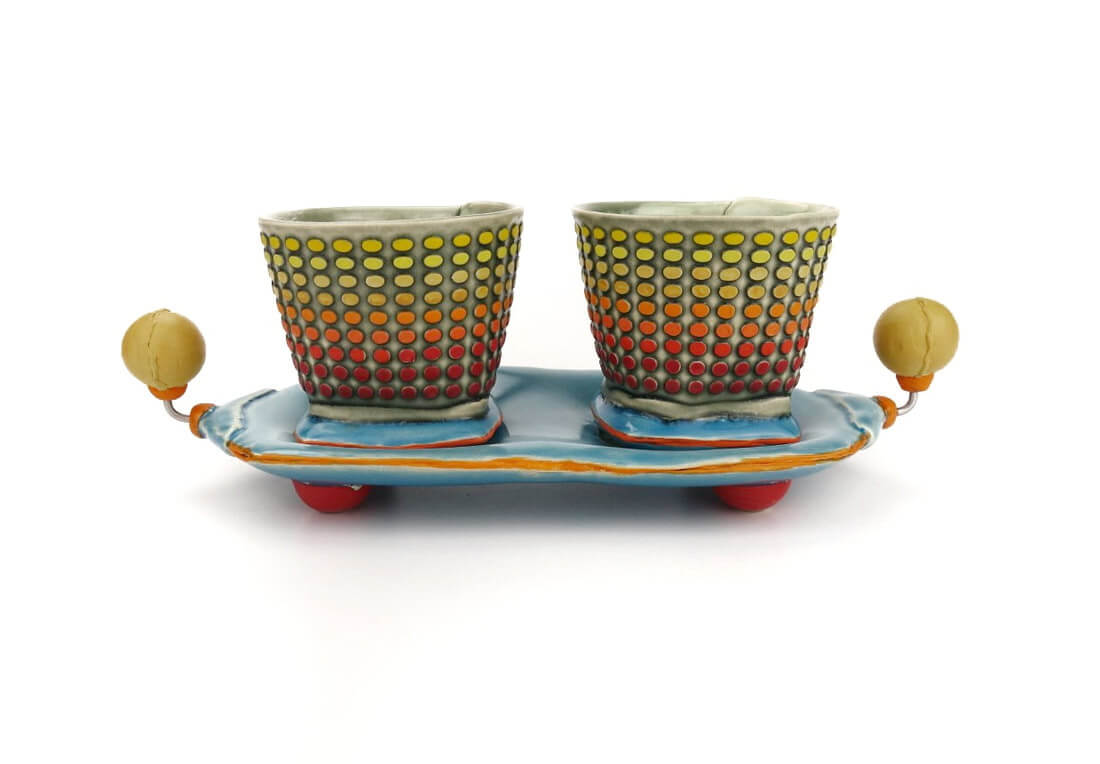
What methods do ceramicists use to bridge the gap between ideas and realized forms? Making the Thing to Make the Thing highlights the period of trial and testing that leads clay artists to a finished product or signature aesthetic. Through a handful of problem-solving exercises, residents will work alongside one another to navigate experimentation and develop tools and processes that aid their making practices.
Session IVJuly 20–31Organizers:
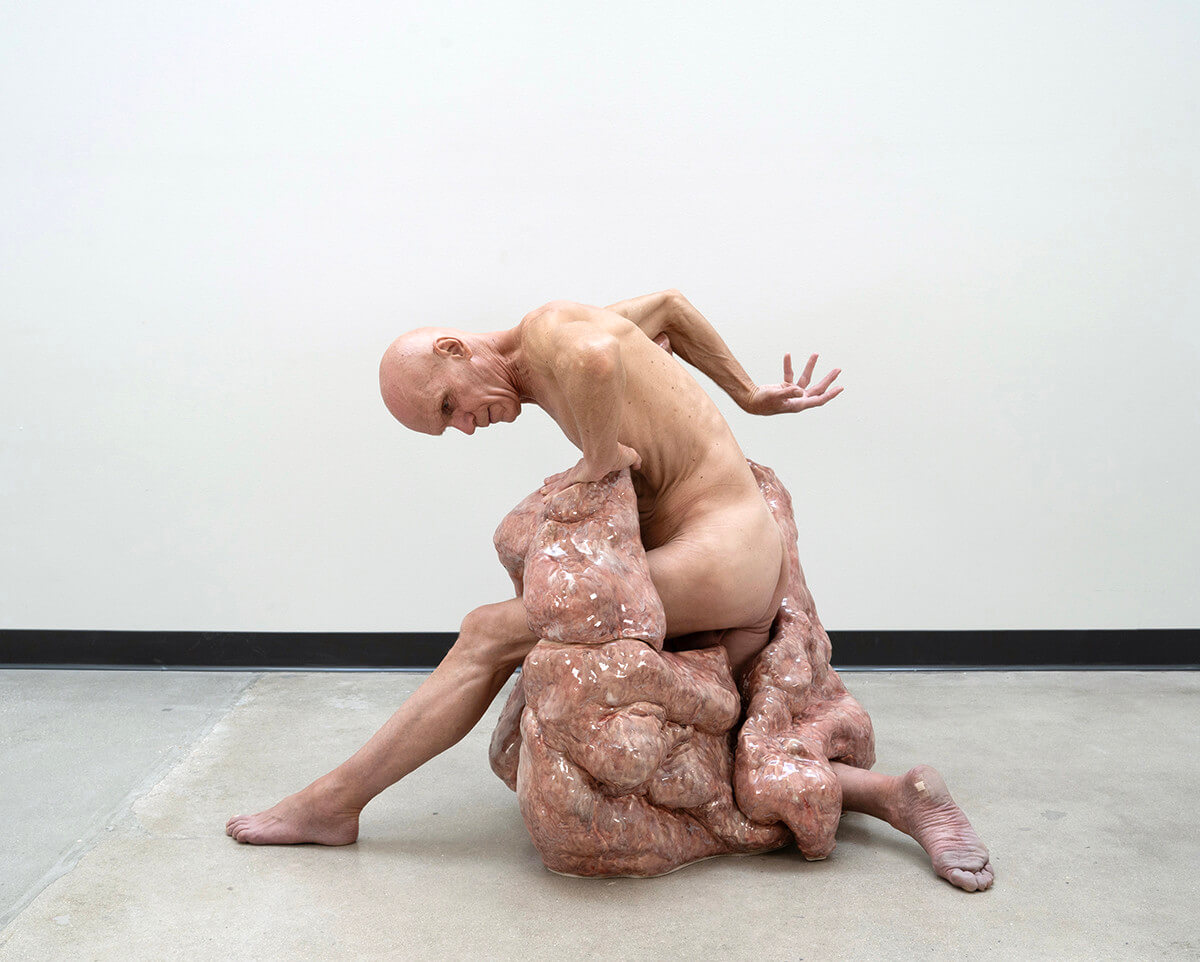
How does physical existence inform interaction with clay? Thinking Through the Body begins with the understanding that all people navigate their internal lives through a vulnerable, imperfect, ever-changing, beautiful, and mortal corporeality. Whether implied or represented directly, the body will be the core focus in the studio, and residents will be encouraged to consider the ways in which the body impacts their relationships with material and form.
Session VAugust 3–14Organizers:
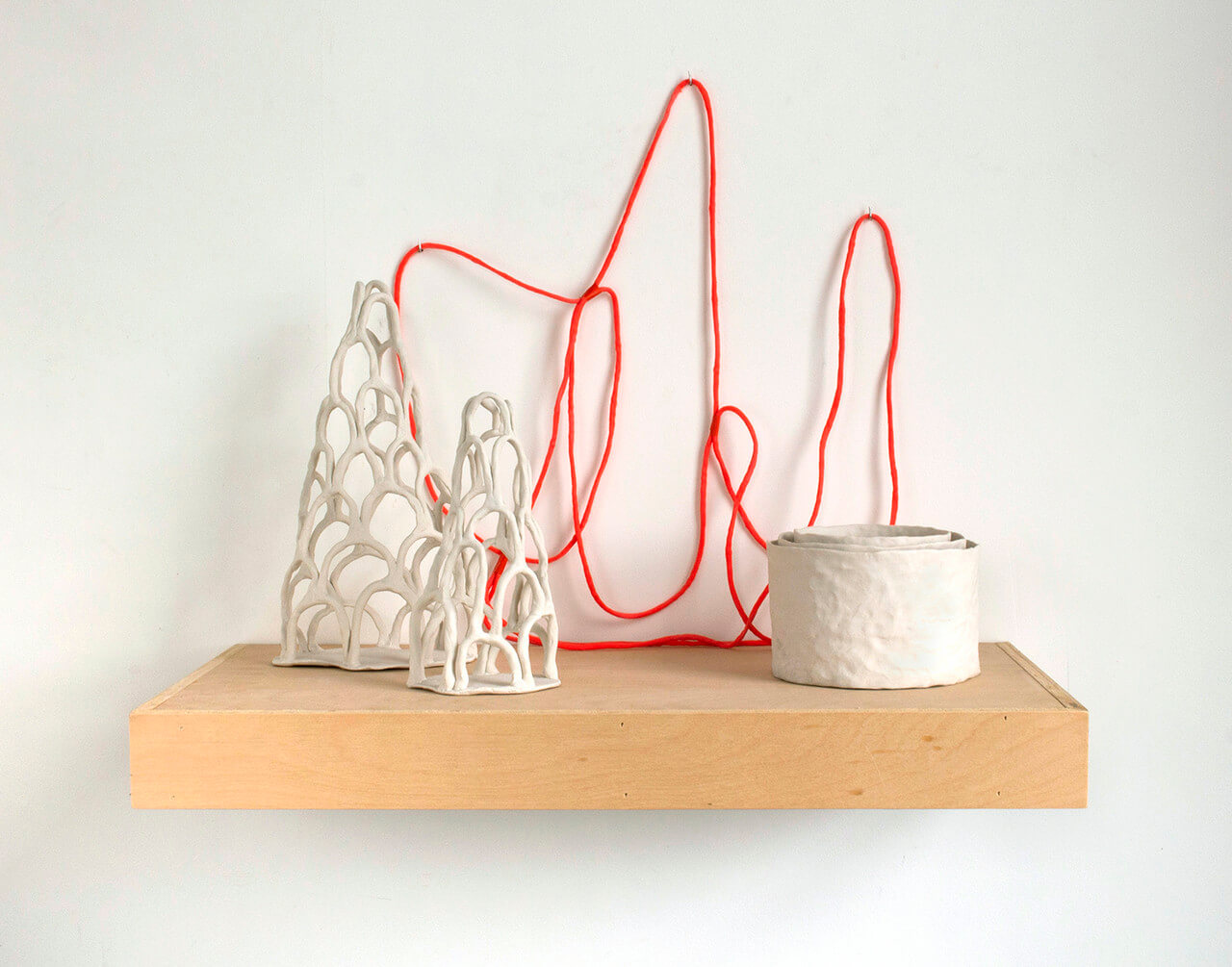
How do artists negotiate change and disruption? While its forms vary—grief, caregiving, relocation, shifts in health or identity, political or environmental instability, or creative burnout—nearly all artists encounter moments when their ability to make work is interrupted or altered. Residents will reflect on the relationship between disruption and artistic evolution, questioning how art-making can serve as both response and resistance to these challenges. Collaborative experimentation, generative prompts, discussion, and grounding practices will support individual work while fostering community and collective reflection.
Session VIAugust 17–28Organizers:
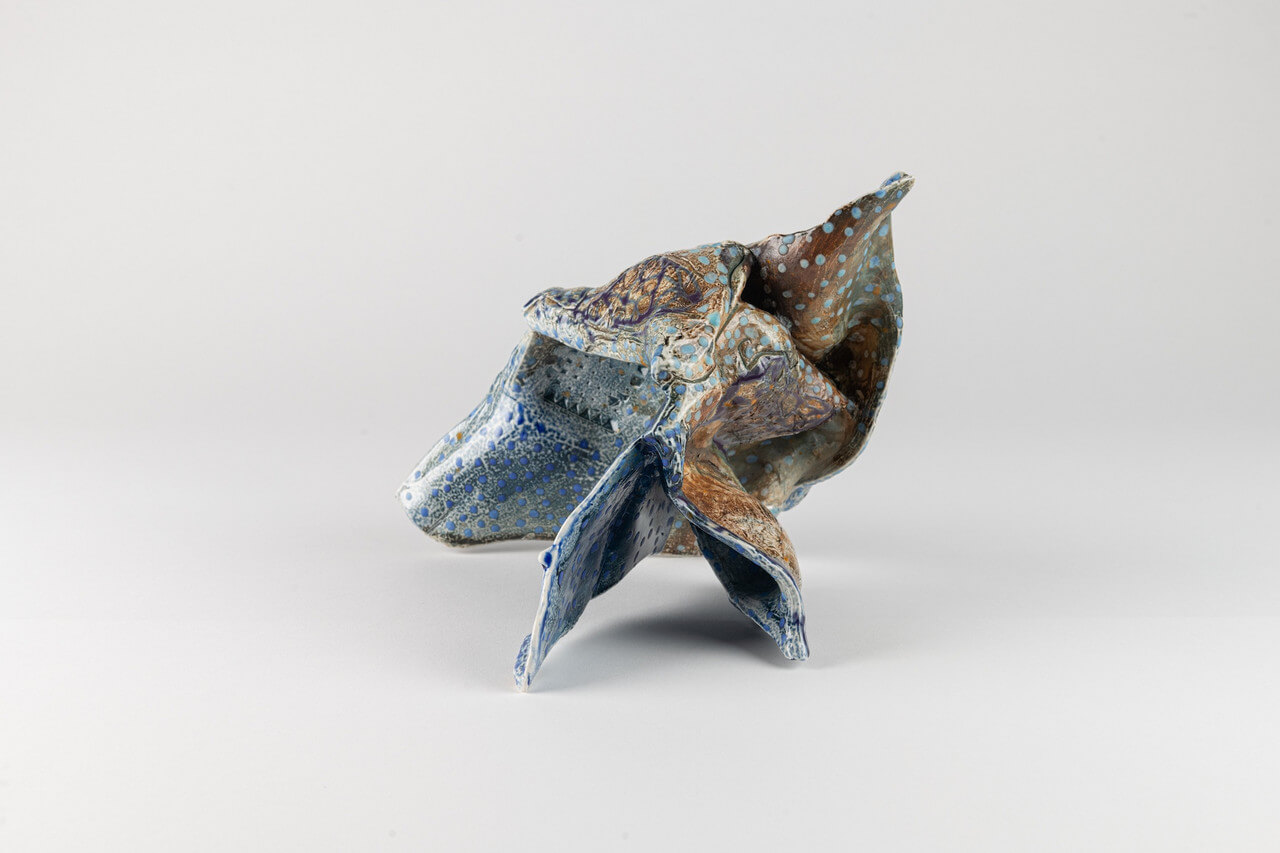
How can art educators maintain stability between their roles as teachers & makers? This session is designed to give dedicated artist-educators—those who teach in community arts centers, colleges, public schools, and private institutions—the time and space to focus on their own creative work. Both a celebration and a much-needed restoration, Watershed will be a place for artist-educators to rest, reflect, experiment, and re-engage with their work on their own terms. Restoring the Balance Between Teacher & Maker is a celebration, a much-needed respite, and a recognition of the unique balance artist-educators strike between teaching and making.
Residency Details
Studios
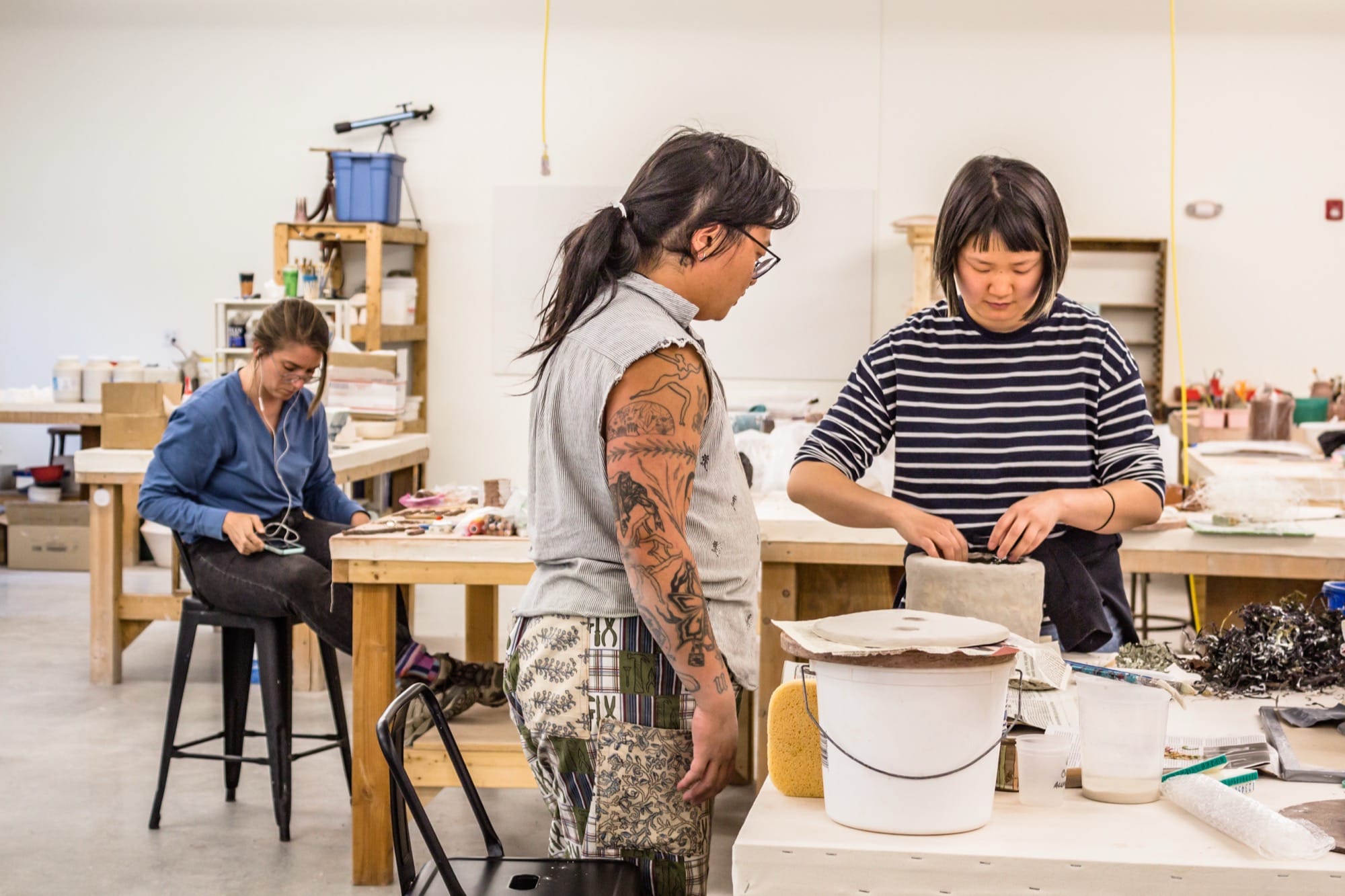
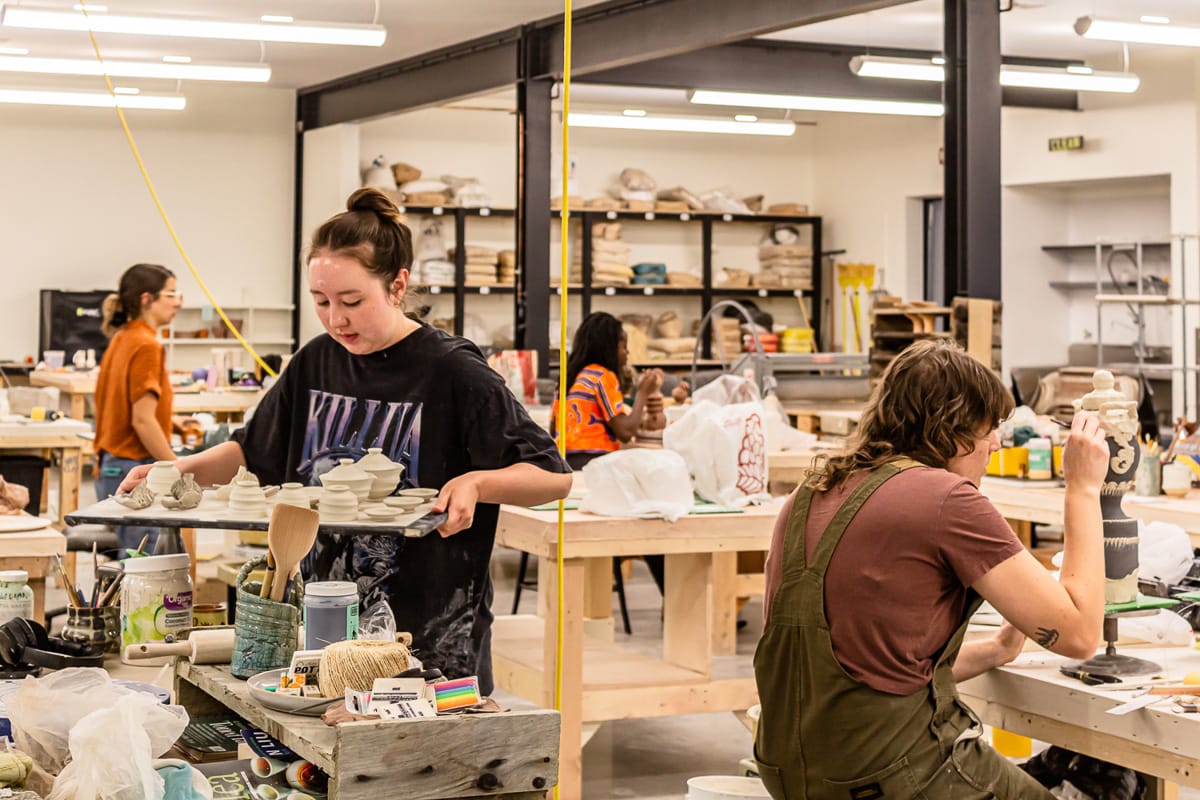
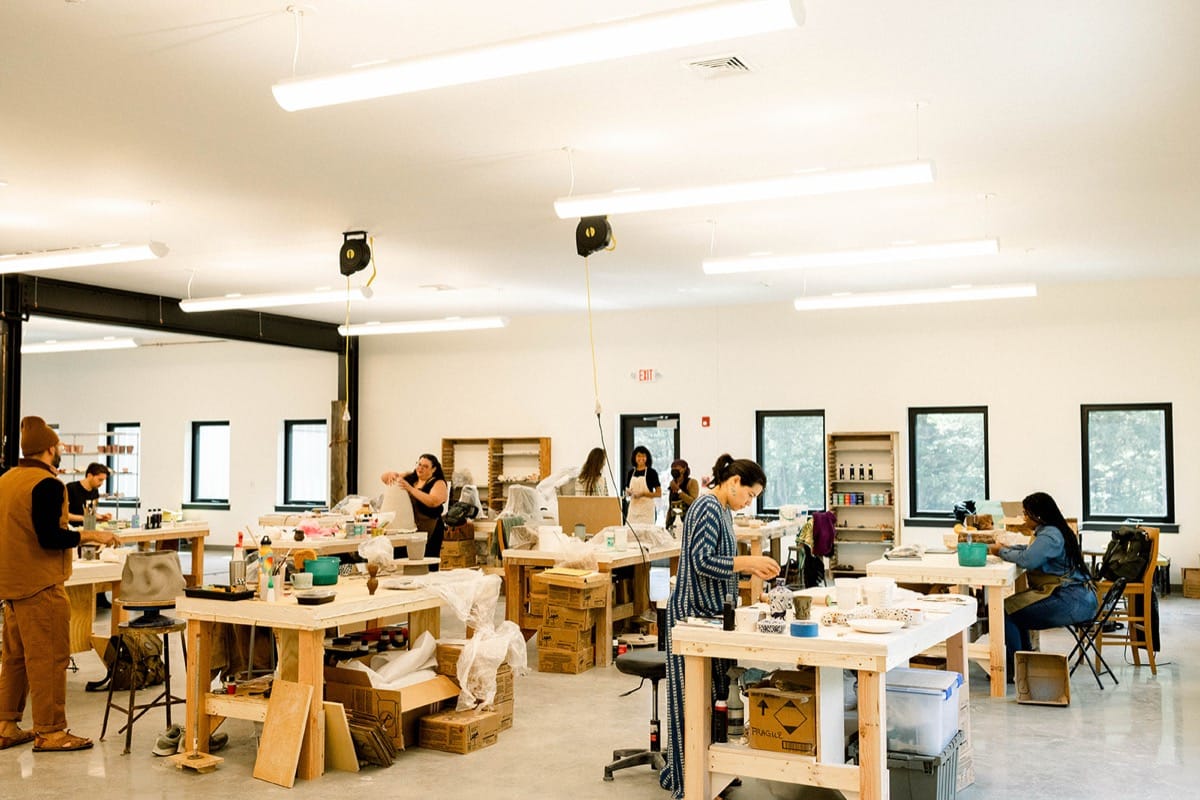
Built in 2021, the 7,500 square-foot Windgate Studio offers artists a state-of-the-art, open concept space to work and connect with other makers. The studio provides ideal conditions for interaction and self-directed exploration at a variety of scales. During a residency, artists receive an individual canvas-covered worktable. Electric and kick wheels, as well as a variety of standard ceramic equipment — including slab-rollers, mixers, and an extruder — are available for resident artist use.
Structure
Accepted artists come to Watershed for two weeks at a time. Lightly guided by the session organizers and theme, residents work alongside each other in the studio. Studio staff are present for support, however participants are expected to be able to work in the studio independently. Meals are prepared by Watershed kitchen staff and enjoyed together in the Commons by residents and staff alike.
.jpg)
Application Details
Applications for summer sessions are hosted through Slideroom. Applicants have the opportunity to rank sessions in their preferred order.
Applications for the following year open in late fall, with a February 1 deadline. Scholarship awards and session placements are finalized in mid-March. See below for details on eligibility, application guidelines, selection process, fees, and scholarships & financial support.
Watershed is committed to creating an equitable and welcoming space for all to explore creative practice. Any artist who is comfortable working independently in a clay studio may apply to take part in a summer residency.
Please note: There is no formal instruction during summer residency sessions, although knowledge-sharing amongst residents is encouraged, and studio staff are available for general support and troubleshooting.
In addition to contact information, applicants must submit ten images of recent work, a CV or written description of their experience related to their creative practice, a statement about their work, and a statement of interest explaining why they would like to take part in a Watershed session.
Applications are reviewed by a panel made up of Watershed staff, alumni, and guest artists. Watershed sessions include a mix of emerging, mid-career, and established artists, with preference given to new attendees. We endeavor to create cohorts that represent the breadth and depth of artists working in clay, with attention given to age, race, gender, ethnicity, and background.
Panelists consider the following criteria when reviewing applications:
- The degree of proficiency or promise demonstrated in the submitted work’s concept, content, and aesthetics.
- The degree to which the applicant demonstrates a commitment to and relative accomplishment within their practice via their submitted work, their artist statement, and their CV.
- The degree to which the applicant’s interests and practice align with the theme(s) of the session(s) to which they have applied.
- How well the applicant’s interests and goals align with what the Watershed residency experience offers.
All residency fees are subsidized thanks to generous support from our donors. It costs us around $3900 per person to host the residency. Watershed does not require any resident artist to pay this cost in full. The cost of a summer residency consists of the residency fee and the room & board fee.
Application Fee
$25
2027 Residency Fees
Regular Artist — $1,825
Invited Artist — $1,375
This fee covers 24-hour access to the kilns and studio.
2027 Room & Board Fees
Double Room & Shared Bath — $825
Single Room & Shared Bath — $1,230
Double Room & Private Bath — $1,430
Single Room & Private Bath — $1,750
This fee covers housing and meals. To learn more, please visit our Campus & FAQ pages.
Kiln & Material Fees
Artists pay kiln and material fees on a per-use basis. Artists pay this sum on the last day of the residency session. Typically, an artist can expect to incur about $250 in material and firing costs. However, this figure varies based on usage.
Payment Schedule
A $200 deposit is due upon registration after acceptance into a session. The deposit is applied against the residency fee. This is not an additional charge. Half of the remaining balance is due on April 15. Final payment for Sessions I, II, & III due May 15. Final payment for Sessions IV, V, & VI due June 15.
Payment Methods
Invoices for payments are sent to artists via email. Watershed accepts cards and personal checks. You may mail a check to 103 Cochran Road, Edgecomb, ME, 04556.
Refund Policy
Please read our Cancellation Policy here.
For more information about scholarships, see our Scholarships page.
Watershed offers a limited number of merit scholarships to support artists attending a session. Funds cover residency fee-related items, including housing, meals, and studio use.
The application for scholarships and work exchange is included within the Slideroom application. Artists indicate their interest in applying and fill out the corresponding questions.
Full scholarships are available to all applicants and cover residency fees along with room and board charges.
Watershed also offers full scholarship awards specifically for:
- Artists of color
- International and/or multicultural artists
- Artists from underrepresented populations in the ceramics field: This includes but is not limited to LGBTQ+ artists, artists of color, artists with disabilities, indigenous artists, and artists in a cultural minority.
- Artists whose work addresses political, social, cultural, or environmental issues and who use their practice as a vehicle to create positive changes within their communities
- Emerging artists
Partial scholarships are open to all applicants and cover up to two-thirds of the total residency and housing fees. Award recipients are responsible for the remainder of their charges.
Please note: All awardees cover their travel expenses, materials, kiln firings, laundry fees, and packing/shipping of work, and should budget accordingly. While materials and kiln costs vary based on how much work an artist makes or fires, we suggest budgeting around $250.
Work exchange Watershed occasionally needs artists to join a session who are able to help in the kitchen for approximately twelve hours each week. In exchange, work exchange artists receive a $385 discount off their residency fees.
The work requires standing for up to three hours at a time, lifting and washing racks of dishes, pots, and pans, and putting away cleaned and dried items.
School-Funded Student Assistantships
As a non-profit interested in supporting the next generation of ceramic artists, Watershed welcomes the opportunity to integrate undergraduate and graduate students into our Summer Residency — both as artists and as assistants. Through the Funded Assistantship Program, sponsoring colleges and universities cover the residency fees at a discounted rate for a student of their choice. In exchange, the student works twelve hours each week for Watershed during their time in residence.
Prerequisites: Students chosen for Funded Assistantships must feel comfortable working independently in a clay studio. Instruction is not provided during residency sessions.
- The Sponsoring Institution selects a student to attend a summer session and covers the cost of the student’s two-week residency. Some institutions tap department or other summer program funds, while others have established an endowment or work with student art organizations to act as the sponsoring entity.
- Placement in summer residency sessions for regular artists-in-residence is through a competitive, juried application process. Schools can guarantee placement in the residency experience for their student by participating in the Funded Assistantship program.
- The Student Assistant agrees to work for Watershed twelve hours per week while taking full advantage of the opportunities provided by the residency. Participants indicate the session theme(s) that they are interested in attending by submitting the online assistant registration form. Watershed sends this forms to assistants after the Institution has registered.
There are a limited number of Funded Assistantship spots available during the Watershed’s Summer Residencies. Sponsoring Institutions will register on a first-come, first-served basis. The annual timeline is as follows:
- December: Sponsoring Institutions registration period begins
- January 30: Sponsor Institution registration deadline
- February 15: Student Assistant registration deadline
- March: Student Assistants are notified of their session placement. Watershed sends invoices to Sponsoring Institutions.
- May 15: Residency fees are due in full.
- May–August: Themed Summer Residency sessions occur.
2026 2-week Summer Residency Fees
Discounted Student Assistantship: $2,155
Regular Artist-in-Residence: $2,575
- The discounted assistantship residency fee covers housing in a double-occupancy room, meals, 24/7 studio and kiln access, and all other privileges afforded resident artists.
- Not included in the residency fees: travel, shipping, materials, and kiln firings. Artists pay material and kiln firing fees incurred through Watershed on a per-use basis on the last day of the residency session. They are also responsible for their own travel and shipping arrangements. Some Sponsoring Institutions choose to provide additional funding directly to students for these expenses.
Interested in applying?
Our Summer Residency application opens in January! Detailed information is listed on our Apply page, and generally stays consistent each year.